Blog

A “blog,” short for “weblog,” is an online platform where individuals, organizations, or businesses regularly publish written content in a chronological order. These posts, often written in an informal and conversational style, cover a wide range of topics, including personal experiences, hobbies, news, opinions, and expertise in various fields. Blogs provide a means for authors, known as bloggers, to share information, express their thoughts, and engage with a readership through comments and discussions. Blogs can serve as a creative outlet, a marketing tool, or a source of information and entertainment. They have become an essential part of the digital landscape, with many blogs addressing niche interests and contributing to the dissemination of information and ideas on the internet.

Progressive Web Apps In Iot_ Connecting Devices Through Web Technologies thumb
Blog

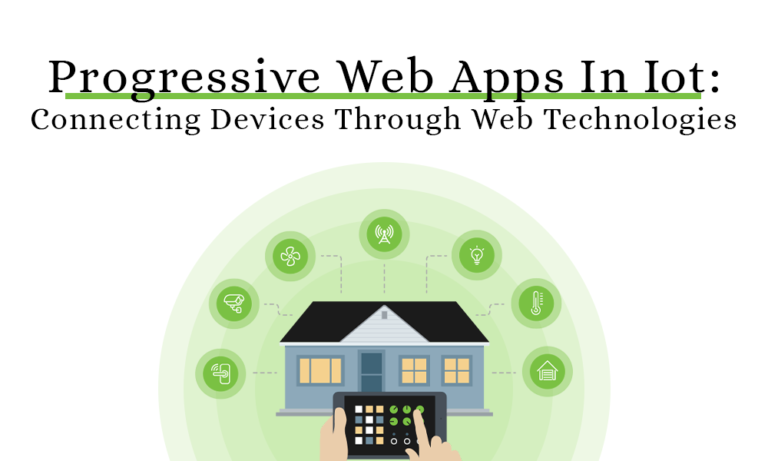
Progressive Web Apps In Iot: Connecting Devices Through Web Technologies

A smart home powered by unique web technologies has become a reality for many people. Progressive Web Apps (PWAs) are enabling users to connect their everyday devices, such as lights, door locks, and security systems to the internet with greater ease than ever before. This article explores the use of PWAs in IoT applications and offers best practices for PWA development. Key Takeaways Progressive Web Apps (PWAs) offer several advantages for IoT integration. PWAs provide increased reach and performance, low development costs, improved user experience, and easy accessibility for IoT applications. Web technologies can be used to securely and efficiently connect IoT devices. Leveraging existing APIs and effective data management are important considerations for PWAs in IoT. Overview of Progressive Web Apps Progressive Web Apps (PWAs) are web applications that implement modern web technologies to provide a user experience comparable to native mobile applications. PWAs are designed to leverage features such as mobile optimization, caching, and offline support in order to deliver a seamless user
Read More »
Pwas And Hybrid Mobile Apps_ Bridging The Gap Between Web And Native Experiences thumb
Blog

Pwas And Hybrid Mobile Apps: Bridging The Gap Between Web And Native Experiences

An ancient proverb speaks of two great forces that have been in competition since the dawn of time: web and native experiences. The clash between these two titans has often been seen as a battle with no victor, until now. PWAs and hybrid mobile apps offer a bridge between web and native experiences, allowing users to reap the benefits of both. This article will explore the advantages, disadvantages, use cases, best practices for development, common challenges, and more involved in PWAs and hybrid mobile apps. Key Takeaways PWAs are fast loading, reliable, and work offline Hybrid mobile apps combine elements of native and web apps PWAs provide a streamlined user experience, while hybrid apps offer a more native feel PWAs and hybrid apps reduce development costs by working across multiple platforms and eliminating the need for separate versions Overview of PWAs and Hybrid Mobile Apps An overview of Progressive Web Apps (PWAs) and Hybrid Mobile Apps can provide a comparison between web and native experiences.

Read More »
Pwas In Healthcare_ Streamlining Patient Care And Data Accessibility thumb
Blog

Pwas In Healthcare: Streamlining Patient Care And Data Accessibility

The digital revolution has opened a new gateway of possibilities for healthcare, streamlining patient care and data accessibility. Progressive Web Apps (PWAs) are the latest technology to make their mark on the industry, providing an enhanced user experience that promises to improve both patient satisfaction and provider efficiency. This article will explore the benefits of PWAs in healthcare, challenges of implementation, examples in use, impact on patient satisfaction, and more. Key Takeaways PWAs in healthcare provide quick access to Electronic Health Records (EHR) and streamlined workflows. They enhance data security through encryption and two-factor authentication. PWAs can be accessed from any device with one click, facilitating timely and accurate care. They integrate seamlessly into existing EHR systems, improving efficiency in healthcare organizations. Overview of PWAs Progressive Web Applications (PWAs) are web-based applications that leverage the latest technologies to provide a user experience similar to a native application. PWAs are particularly useful in the healthcare industry as they offer quick access to Electronic Health Records (EHR),

Read More »
Pwas In The Gaming Industry_ Creating Immersive Web-Based Experiences thumb
Blog

Pwas In The Gaming Industry: Creating Immersive Web-Based Experiences

The gaming industry has seen an impressive rise in popularity, growing from a niche market to a multi-billion dollar industry. With the introduction of Progressive Web Applications (PWAs) into the gaming sector, players are now able to experience immersive web-based games with enhanced graphics and features that bridge the gap between native mobile apps and traditional web-based gaming platforms. In this article, we will explore how PWAs are revolutionizing the online gaming experience and their potential impact on the future of the gaming industry. Key Takeaways PWAs in the gaming industry offer improved performance and accessibility across platforms, allowing users to access games from multiple devices and browsers without additional software. PWAs reduce development costs compared to traditional native applications, providing a cost-effective solution for game developers. Web-based gaming platforms create immersive experiences that run on multiple platforms and operating systems, bridging the gap between traditional console games and mobile titles. The future of PWAs in gaming includes continued growth and adoption, advancements in technology

Read More »
Voice-Enabled Pwas_ Exploring Speech Recognition And Synthesis In Web Apps thumb
Blog

Voice-Enabled Pwas: Exploring Speech Recognition And Synthesis In Web Apps

As the world moves inexorably into an era of increased automation, voice-enabled progressive web apps (PWAs) are emerging as a powerful tool to bridge the gap between humans and machines. By combining speech recognition and synthesis technology with web app development, PWAs are being used to create exciting new experiences for users. In this article, we will explore the benefits of using voice-enabled PWAs, examine their use cases, discuss popular tools for developing them, and provide best practices for creating successful applications. Key Takeaways Voice-Enabled PWAs provide increased usability and efficiency. Voice-Enabled PWAs improve accessibility for users with disabilities. Voice-Enabled PWAs reduce the need for complex commands and navigation. Voice-Enabled PWAs offer higher accuracy and natural sounding feedback through speech synthesis. Overview of Voice-Enabled PWAs Voice-enabled Progressive Web Apps (PWAs) are web applications that utilize speech recognition and synthesis technology to provide users with an interactive voice experience. Speech recognition enables PWAs to accurately recognize spoken commands, while speech synthesis makes it possible for a

Read More »
Offline-First Approach In Pwas_ Building Apps For Low Or Unstable Connectivity thumb
Blog

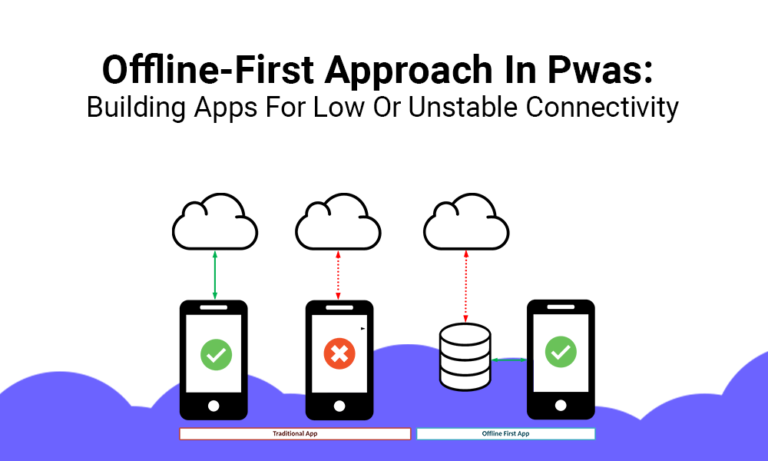
Offline-First Approach In Pwas: Building Apps For Low Or Unstable Connectivity

The development of Progressive Web Applications (PWAs) has facilitated the creation of web applications that are reliable, secure, and can be accessed in low or unstable connectivity conditions. This article explores how the Offline-First approach can be used to build PWAs for low or unstable connectivity. It will discuss the benefits and challenges of this approach as well as strategies for optimizing PWAs, how to handle network errors, debugging and testing procedures, security considerations, and resources available. Key Takeaways Offline-First Approach focuses on offline interactions and caching strategies, ensuring uninterrupted access to data and reducing the amount of data needed for each interaction. Strategies for optimizing PWAs include content caching, image optimization, compression algorithms, and application shells, all of which improve performance under poor network conditions. Service Workers play a crucial role in offline-first network requests by enabling quick responses, caching strategies, preloading content, and offline accessibility. Data storage, security, and error handling are important aspects of offline-first approach, including leveraging local storage, effective error

Read More »