Blog

A “blog,” short for “weblog,” is an online platform where individuals, organizations, or businesses regularly publish written content in a chronological order. These posts, often written in an informal and conversational style, cover a wide range of topics, including personal experiences, hobbies, news, opinions, and expertise in various fields. Blogs provide a means for authors, known as bloggers, to share information, express their thoughts, and engage with a readership through comments and discussions. Blogs can serve as a creative outlet, a marketing tool, or a source of information and entertainment. They have become an essential part of the digital landscape, with many blogs addressing niche interests and contributing to the dissemination of information and ideas on the internet.

Fetch API in Progressive Web Apps thumb
Blog

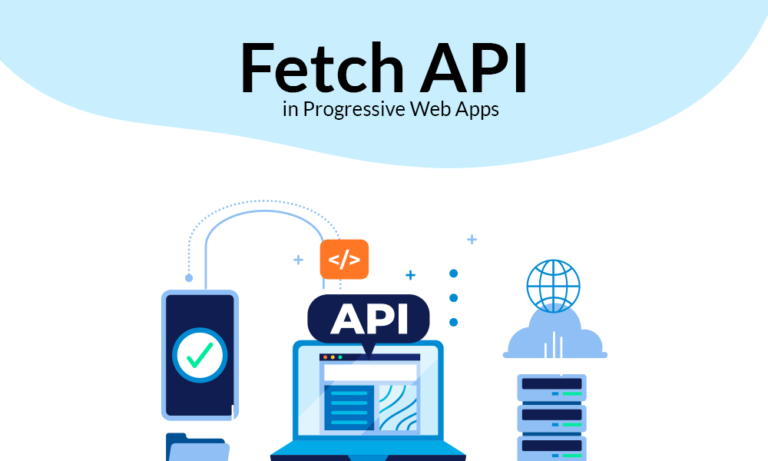
Fetch API in Progressive Web Apps

  A. Overview of the Fetch API for making HTTP requests   1. Introduction to the Fetch API and its purpose in PWAs   The Fetch API is a modern JavaScript interface for making network requests, primarily used for retrieving resources from a server. It provides a more flexible and powerful alternative to traditional methods like XMLHttpRequest. In the context of Progressive Web Apps (PWAs), the Fetch API plays a crucial role in fetching data and resources asynchronously, allowing PWAs to work offline and provide a responsive user experience.   One of the key advantages of the Fetch API is its simplicity and ease of use. It uses a straightforward syntax that allows developers to send HTTP requests and handle responses with just a few lines of code. The fetch() function is the core method of the Fetch API, which takes a URL as its parameter and returns a Promise that resolves to the Response object. Developers can then use methods like .json() or .text()

Read More »
Comprehensive Faqs Guide_ Offline Functionality In Progressive Web Apps_ Strategies And Techniques thumb
Blog

Comprehensive Faqs Guide: Offline Functionality In Progressive Web Apps: Strategies And Techniques

Recent advances in web application technology have enabled the development of progressive web applications (PWAs) which offer the performance and features of a native app experience without needing to install an application. Offline functionality is one such feature that allows PWAs to be accessible even when internet access is not available. This comprehensive FAQs guide explores the strategies and techniques required for implementing offline functionality in PWAs, from basic caching fundamentals to optimization, data synchronization, graceful degradation and fallback strategies, hybrid offline-online modes, content updates and more. By exploring these topics, readers will gain a deeper understanding of how best to utilize offline functionality for their own PWA projects. Offline Functionality Basics 1. What is offline functionality in Progressive Web Apps (PWAs)? PWAs offer the ability to utilize certain functionalities even when an internet connection is not available. Offline functionality in Progressive Web Apps (PWAs) is a set of capabilities that allow users to interact with applications while disconnected from the web. This includes: Accessing

Read More »
Designing Engaging User Experiences In Pwas_ Ux Strategies And Guidelines thumb
Blog

Designing Engaging User Experiences In Pwas: Ux Strategies And Guidelines

Recent advances in technology have enabled the design of engaging user experiences (UX) through Progressive Web Apps (PWAs). These applications deliver a seamless experience for users across multiple platforms and devices. This article will explore UX strategies and guidelines for designing PWAs to ensure an enjoyable user experience. Beginning with the User Interface (UI) design strategy, this paper will delve into visual design principles, navigation and menu designs, typography and color schemes, offline mode considerations, progressive enhancement techniques, and cross-platform compatibility best practices. As we embark on this journey together to discover how to create an optimal UX within PWAs, let us start by considering the importance of creating a visually appealing UI that is intuitive to use. Introduction to User Experiences in PWAs By understanding the importance of user experience (UX) in progressive web applications (PWAs), developers can create engaging experiences that will captivate users and bring them closer to their desired outcomes. UX design is an important factor when it comes to creating

Read More »
Overview Of Progressive Web Apps_ Key Concepts And Benefits thumb
Blog

Overview Of Progressive Web Apps: Key Concepts And Benefits

The world of technology is ever-evolving and changing, constantly pushing boundaries and creating new possibilities. Progressive web apps are a prime example of this advancement – they offer a revolutionary way to access information in the digital age. Imagining a website that functions like an app – fast loading, smooth navigation, engagement notifications – it’s an exciting concept that has been gaining traction with developers all over the globe. This article will provide an overview of progressive web apps, including key concepts and benefits for both users and developers alike. It will also discuss implementation best practices, key performance indicators (KPIs), and benchmarks for successful development. Through understanding these fundamentals, readers can gain insight into this powerful technology so they can make informed decisions about its use in their projects. Introduction to Progressive Web Apps with the advancement in Information Technology, Progressive Web Apps (PWAs) are a new type of web application that combines the best features of both a website and an app. It

Read More »
Conflict Resolution Techniques for Client Disputes
Blog

Conflict Resolution Techniques for Client Disputes

Introduction to Conflict Resolution Techniques in Client Disputes Welcome to our guide on conflict resolution techniques for client disputes. In the business world, conflicts with clients are inevitable, but knowing how to effectively resolve them is essential for maintaining positive relationships and ensuring successful outcomes. In this guide, we will explore various strategies and techniques that can help you navigate and resolve conflicts with clients. By understanding the importance of active listening, effective communication, empathy, negotiation, problem-solving, and adapting to different client personalities, you will be better equipped to handle challenging situations. Client disputes often arise due to miscommunication, unmet expectations, or differing viewpoints. By actively listening to your clients, you will gain valuable insights into their concerns and desires. Active listening involves fully focusing on what the client is saying, refraining from interrupting, and seeking clarification when necessary. By being genuinely attentive, you show your clients that their perspective is heard and valued, which can greatly contribute to conflict resolution. Effective communication techniques play

Read More »