Blog

A “blog,” short for “weblog,” is an online platform where individuals, organizations, or businesses regularly publish written content in a chronological order. These posts, often written in an informal and conversational style, cover a wide range of topics, including personal experiences, hobbies, news, opinions, and expertise in various fields. Blogs provide a means for authors, known as bloggers, to share information, express their thoughts, and engage with a readership through comments and discussions. Blogs can serve as a creative outlet, a marketing tool, or a source of information and entertainment. They have become an essential part of the digital landscape, with many blogs addressing niche interests and contributing to the dissemination of information and ideas on the internet.

Progressive Web Apps
Blog

A Journey into Progressive Web Apps (PWAs) – The Complete Manual

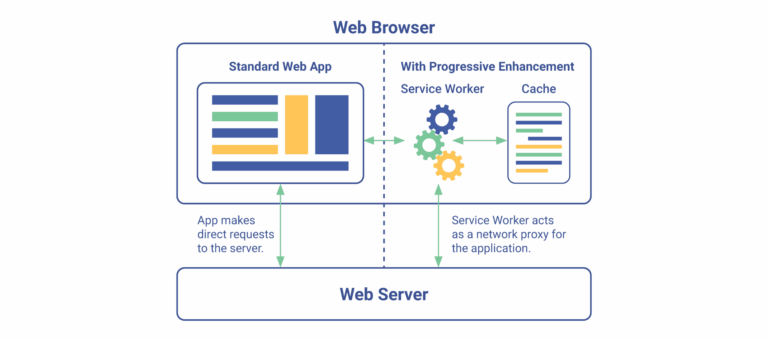
A Journey into Progressive Web Apps (PWAs) – The Complete Manual In the realm of web development, Progressive Web Apps (PWAs) have gained prominence due to their ability to provide an enhanced user experience. This article aims to present a comprehensive guide on PWAs, covering advanced use cases, industry trends, techniques for development and performance optimization, as well as tooling and frameworks employed in PWA creation. Additionally, it will explore the integration of PWAs with backend systems and their potential for cross-platform development. By delving into these topics, readers can gain valuable insights into the world of PWAs and their wide-ranging applications. Key Takeaways Progressive Web Apps (PWAs) enhance user experience and bridge the gap between web and native apps. PWAs offer performance benefits including improved speed and efficiency. Increased user engagement is achieved through features such as push notifications and home screen installation. PWAs are a cost-effective alternative to native apps, with cross-platform compatibility and widespread adoption in various sectors. Introduction to Progressive Web
Read More »
Omnichannel Content Delivery with Headless CMS
Blog

Unlock Omnichannel Content Delivery with Headless CMS

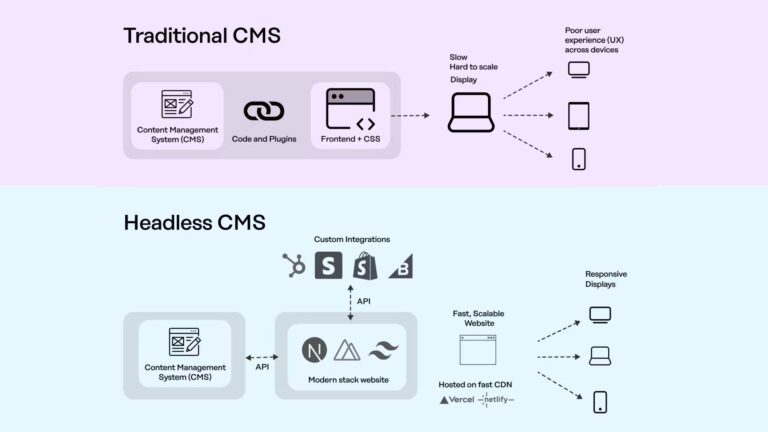
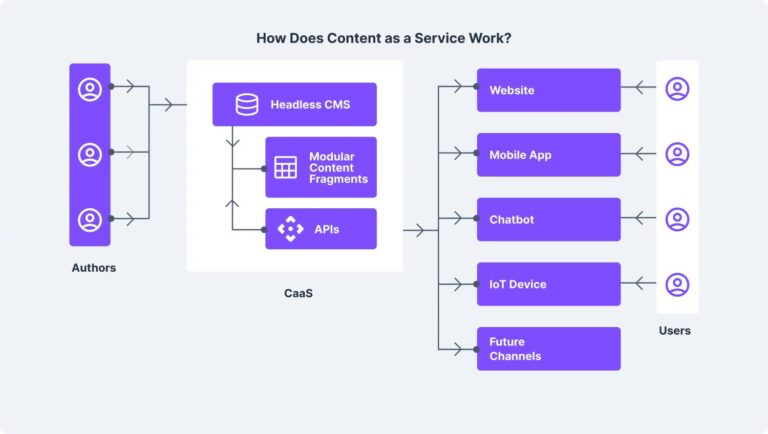
Introduction to Headless CMS A headless content management system (CMS) is a modern way to deliver content across multiple digital channels efficiently and cost-effectively. Also called a ‘decoupled’ CMS, it separates the front-end (user experience) from the back-end (content management). This approach has gained popularity as businesses aim to streamline content delivery. By eliminating the need for a front-end website or app, headless CMS allows content to be created once and published everywhere from a single source. This guide explores headless CMS architecture, its benefits and limitations, common use cases, and how to choose and implement the right platform for your business. We’ll also cover essential security and deployment tips. What is a Headless CMS? A headless CMS decouples content storage and management from its presentation. Instead of combining everything in a single system, it delivers content via APIs. This makes it ideal for businesses that distribute content across multiple platforms and devices. With no built-in front-end (the “head”), it functions as a content repository

Read More »
Build a CMS with Microservices-Based Architecture
Blog

Build a CMS with Microservices-Based Architecture

Microservices-Based CMS Architecture Introduction to Microservices-Based CMS Architecture A microservices-based CMS architecture is a modern way to build content management systems that are scalable, flexible, and cost-effective. Instead of relying on a monolithic system, this approach breaks development into smaller, independent services. This structure allows teams to deploy updates faster and manage features more efficiently. Each service in a microservices-based architecture handles a specific function, such as user authentication or content delivery. These services can be developed and maintained separately, making updates easier without affecting the rest of the system. This approach offers several benefits, including faster development, improved scalability, better security, and reduced maintenance costs. It also supports smooth integration with multiple platforms, allowing teams to build tailored systems for specific needs. Choosing the right CMS platform is crucial to making the most of microservices architecture. Popular options like WordPress, Drupal, and Joomla each have unique features, so it’s important to compare them before deciding. Exploring the Benefits of a Microservices Architecture Developers often

Read More »
traditional-vs-headless
Blog

Discover the Pros and Cons of Decoupled vs Traditional CMS

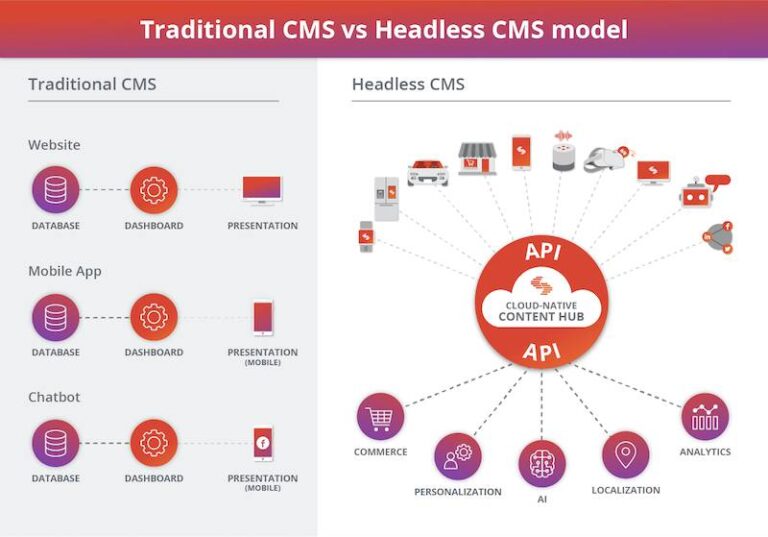
Introduction to Traditional CMS A Traditional Content Management System (CMS) is a widely used method for managing website content. It allows users to handle various content types, including text, images, videos, and documents. With all features hosted on one platform, users can manage their website from a single interface. Traditional CMS platforms provide a dashboard where users can easily create, edit, delete, and organize content. Through a password-protected admin panel, users can customize their websites using themes, plugins, and different content types. Most traditional CMSs also include built-in tools for SEO and analytics. Overall, a traditional CMS is a cost-effective and user-friendly solution for website management. It allows users to quickly update content and design without any coding knowledge. Since all features are centralized, managing content becomes more efficient and straightforward. Introduction to Decoupled CMS In recent years, content management has evolved significantly with the rise of decoupled CMS solutions. A decoupled CMS stores and manages content in one system while delivering it to any

Read More »
Unlock Tailored Experiences for All Users
Blog

Personalize Your CMS: Unlock Tailored Experiences for All Users

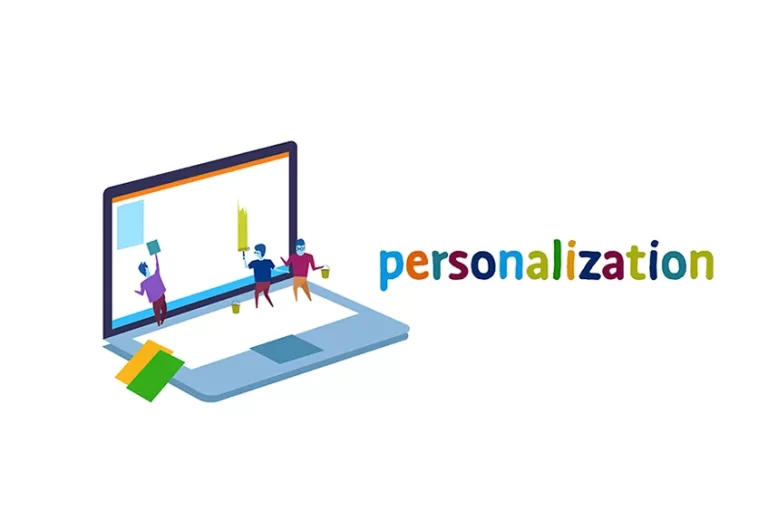
Introduction – Overview of How Personalization Affects the User Experience Modern users expect digital experiences to be tailored to their individual preferences. Personalization plays a key role in enhancing user satisfaction, and this is where content management systems (CMS) become essential. A CMS simplifies content creation and customization, making it easy to deliver personalized experiences. It allows you to adapt content and design based on different user segments. With effective personalization, you can reach the right audience with the most relevant content. Personalizing content through a CMS involves using analytics and user data to understand behavior and preferences. This helps determine which content to display, how to present it, and which calls-to-action (CTAs) to include—ensuring every user interaction feels customized and relevant. Personalization also extends to design. Website layouts and visuals can be adjusted to align with a user’s interests and needs. However, personalization should always aim to improve the user experience, not manipulate behavior unethically. Exploring the Benefits of Personalizing a CMS Personalization is

Read More »
Benefits of Leveraging Microcontent
Blog

Unlock the Benefits of Leveraging Microcontent

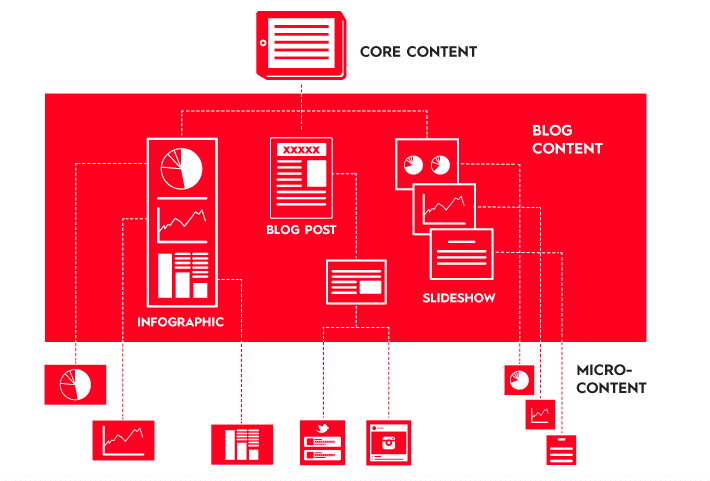
What is Microcontent? Microcontent refers to small pieces of digital content designed to engage users quickly across any platform. It includes everything from blog snippets and social media posts to infographics and short videos. These concise formats are highly effective at grabbing attention and encouraging interaction. Unlike longer content, microcontent delivers messages that are focused and actionable. It’s easy to digest and ideal for busy or distracted audiences who prefer quick, relevant information. In today’s fast-paced digital world, microcontent plays a critical role in communicating quickly and effectively. It’s also cost-efficient, requiring fewer resources to create. Its power lies in its ability to instantly engage users and drive meaningful results. Microcontent helps businesses and marketers share ideas, promote offerings, and build connections. It can improve SEO rankings, reinforce brand loyalty, and attract more attention with less effort. Whether you’re optimizing for search engines or building customer relationships, microcontent is an adaptable and impactful strategy. Use the right keywords, choose relevant topics, and deliver value-packed content

Read More »