Designing a Real Estate CRM for Agents and Brokers
Blog

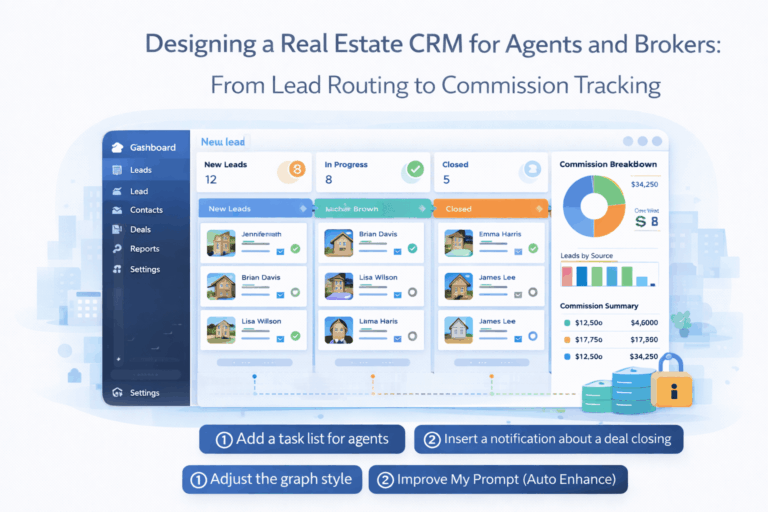
Designing a Real Estate CRM for Agents and Brokers: From Lead Routing to Commission Tracking

The most revealing question you can ask a brokerage about their current CRM is not “what does it do?” but “what do your agents actually use it for?” The answer is almost always a fraction of what the platform was designed to do. Agents use it to log calls, check their lead queue, and occasionally update a deal status. Everything else – the drip campaign builder, the reporting dashboard, the marketing automation workflows – sits largely untouched because it was never built around how agents actually work. That gap between what brokerage CRMs offer and what agents genuinely adopt is not a training problem or a change management problem. It’s a design problem. The platforms that get used are the ones that were built around the agent’s daily workflow – the three or four actions they need to take quickly, repeatedly, in between calls and showings – rather than the ones that were built to demonstrate feature breadth in a demo. This post is about
Read More »
Building Buyer and Seller Portals That Reduce Friction and Increase Conversions
Blog

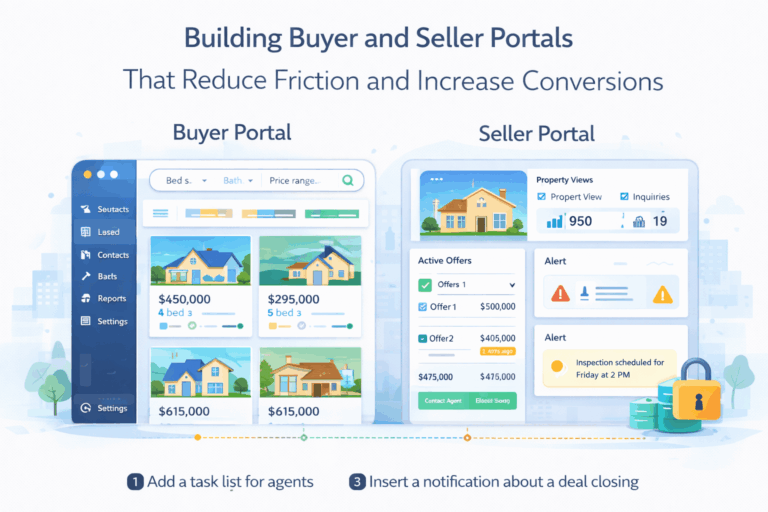
Building Buyer and Seller Portals That Reduce Friction and Increase Conversions

The buyer and seller portal is the part of a real estate platform that the client actually touches. Everything else – the CRM, the commission engine, the MLS sync pipeline, the analytics dashboard – is infrastructure. The portal is the product, from the client’s perspective. And in real estate, where a transaction represents one of the largest financial decisions a person makes, the quality of that product experience shapes whether the client feels confident or anxious, informed or lost, and ultimately whether they complete the transaction or abandon it. Most real estate portals are built as an afterthought to the agent-facing system. The brokerage invests in the CRM, the lead routing, the reporting – and then adds a client portal because clients expect one. It gets the minimum viable design: a login page, a document upload area, a message thread. The client experience it produces is functional in the same way that a fire exit is functional – it works, but nobody designed it to

Read More »
Security and Compliance in Real Estate Platforms
Blog

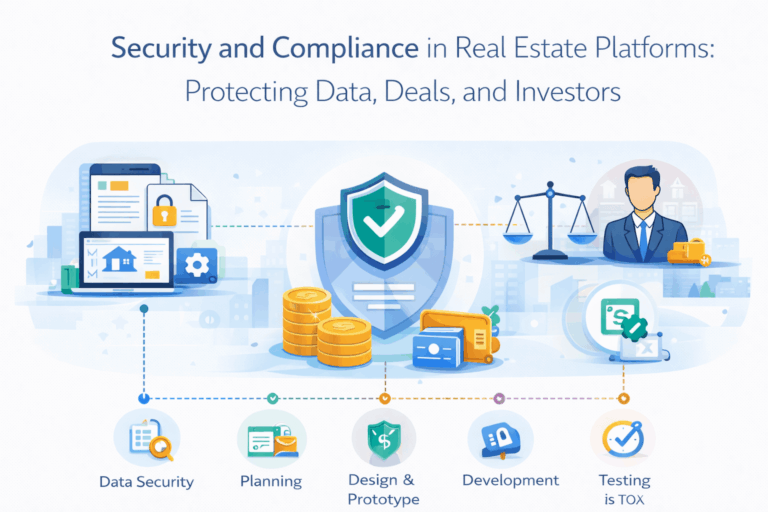
Security and Compliance in Real Estate Platforms: Protecting Data, Deals, and Investors

Security and compliance conversations in real estate software tend to happen at the wrong moment – either too early, when they’re abstract, or too late, when a prospect’s legal team has just returned a vendor questionnaire that the platform can’t answer. The right moment is during architecture, before the first line of code is written, because the decisions that determine a platform’s security posture and compliance readiness are not features that can be bolted on afterward. They’re structural choices that shape the data model, the access control layer, the infrastructure configuration, and the audit trail – and retrofitting them after the fact is one of the most expensive things a real estate technology team can do. This post is about what those structural choices look like in practice – specifically for real estate platforms, where the compliance landscape is more complex than most founders anticipate and where the data being protected includes not just personal information but financial positions, investment decisions, and property ownership records

Read More »
Real Estate Software Implementation Timeline
Blog

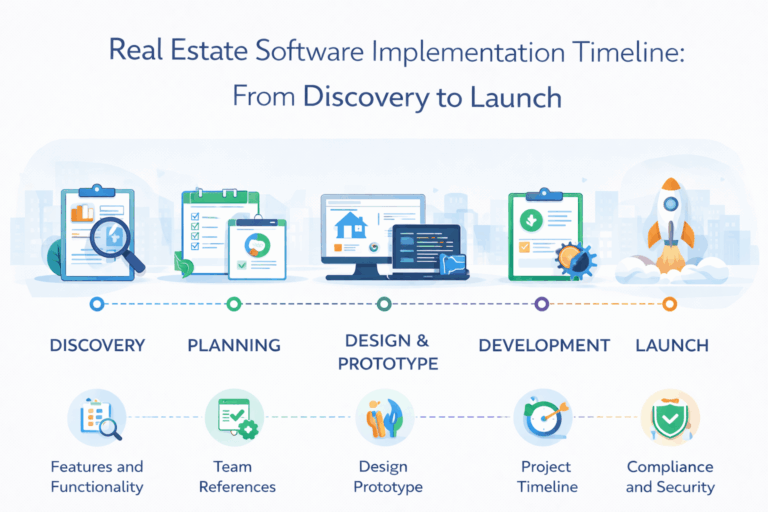
Real Estate Software Implementation Timeline: From Discovery to Launch

The timeline question comes up in the first serious conversation almost every time. A founder needs to know when the platform will be ready before a board meeting, before a fundraising round closes, before a key hire starts, or before a competitor gets too far ahead. The answer they usually get – “it depends on the scope” – is true and nearly useless. What they need is an understanding of what specifically drives timeline variance in real estate software, so they can look at their own requirements and make a realistic plan. This post is that understanding. We’ll walk through the phases of a real estate software project, name the durations that are realistic rather than optimistic, and – more usefully – explain the real estate-specific factors that extend each phase beyond what a generic software timeline would suggest. The goal is not to give you a Gantt chart. It’s to give you the mental model for building a plan you can actually manage against.

Read More »
Real Estate Software Development Costs
Blog

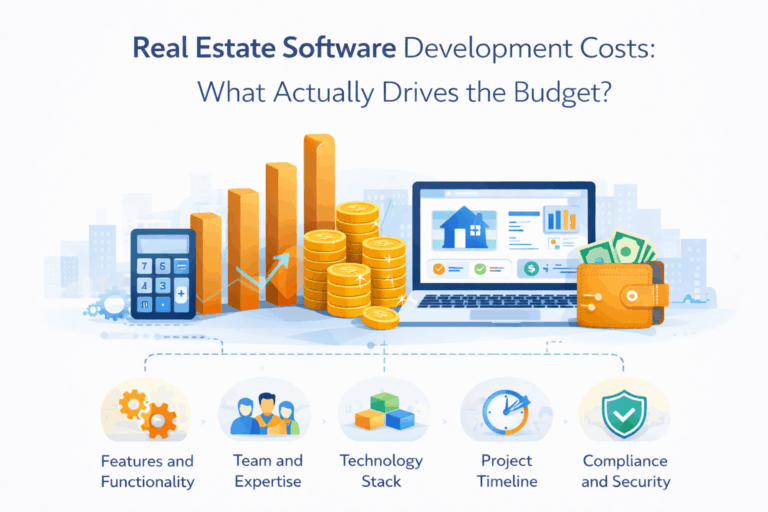
Real Estate Software Development Costs: What Actually Drives the Budget?

If you search for “real estate software development cost,” you’ll find articles that give you ranges like “$25,000 to $500,000+” and then explain that the cost “depends on your requirements.” That’s not wrong. It’s just not useful. A founder trying to build a real budget for a brokerage commission engine or an investor portal needs to understand what specifically drives that range – which decisions push a project toward the lower end, which push it toward the higher end, and where spending more upfront prevents much larger costs later. This post is the honest version of that conversation. We’re not going to quote day rates or give you a pricing calculator. What we’re going to do is walk through the cost drivers that are specific to real estate software – the ones that separate a $150,000 project from a $600,000 project building nominally the same thing – so you can look at your own requirements and understand roughly where they sit and why. The Baseline:

Read More »
How to Choose a Real Estate Software Development Partner
Blog

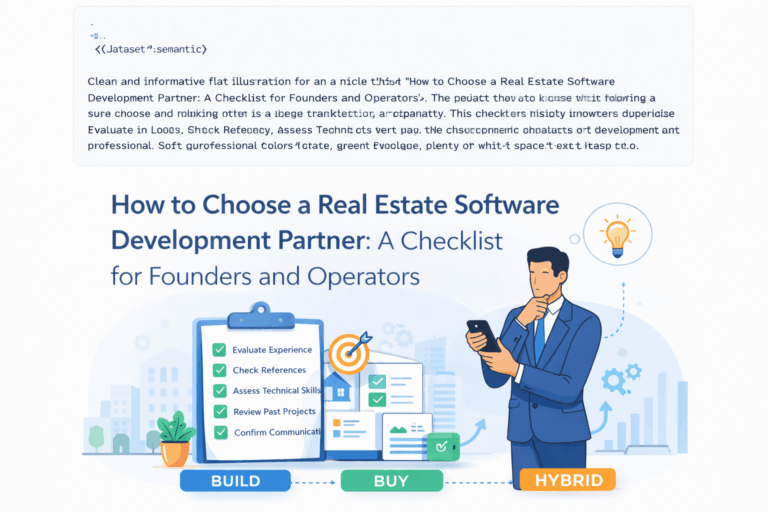
How to Choose a Real Estate Software Development Partner: A Checklist for Founders and Operators

Choosing a software development partner for a real estate platform is one of the highest-stakes vendor decisions a founder or operator will make. Not because software development is uniquely risky as a category – it’s not – but because the consequences of choosing the wrong partner compound across the entire project. A partner who doesn’t understand MLS data will build an integration architecture that works in staging and breaks in production. A partner who has never built a commission engine will scope it as a simple calculation and deliver something that can’t handle the edge cases your agents will hit on day one. A partner who is strong on UI and weak on data modeling will build a platform that looks impressive in a demo and becomes painful to extend six months after launch. Most founders discover these mismatches too late – after the contract is signed, after the first milestone is delivered, after real money and real time have been spent. The evaluation process

Read More »