
ActiveMQ vs Kafka vs RabbitMQ vs Pulsar: Choosing the Right Message Broker
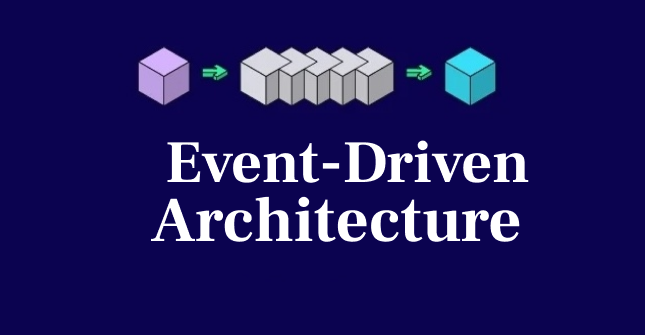
Messaging middleware plays a pivotal role in connecting the components of a distributed system. Instead of services calling each other directly, they send and receive messages through a central middleware layer — which is what makes modern systems flexible, scalable, and resilient when individual pieces fail.
Four brokers dominate this space: Apache ActiveMQ, Apache Kafka, RabbitMQ, and Apache Pulsar. They get described interchangeably as “message queues,” but they make very different architectural trade-offs, and choosing the wrong one is an expensive mistake to unwind later. This comparison covers how each works, where each fits, and what it actually costs to run them.
Why Pub/Sub Became the Default Pattern
Most of these tools are built around the publish-subscribe pattern: producers publish messages to a topic without knowing who will read them, and consumers subscribe to the topics they care about. Four properties explain why it became the backbone of distributed systems:
- It scales by addition. New producers and consumers join without re-engineering what exists. As your requirements evolve, the system grows alongside them.
- It decouples components. Producers and consumers operate independently — no tight integration, no waiting on each other. A slow consumer doesn’t block a fast producer.
- It supports real-time flow. For messaging apps, trading platforms, or IoT systems, pub/sub delivers updates with minimal delay.
- It distributes efficiently. One published message reaches every interested subscriber, like a newsletter reaching everyone on the list — without the producer sending it N times.
Key Takeaways
Before the detailed comparison:
- ActiveMQ is a Java-based broker implementing JMS, supporting many protocols and both point-to-point and publish-subscribe patterns. Strongest in Java enterprise environments.
- Kafka is designed for high-velocity, high-volume streaming data. It excels in real-time data pipelines and stream processing, and dominates the ecosystem.
- RabbitMQ, built on Erlang, supports multiple protocols with famously flexible routing — an excellent choice when messages need to reach multiple destinations through complex rules.
- Pulsar is highly scalable with native multi-tenancy and tiered storage, making it well suited to real-time analytics platforms serving many teams or customers.
ActiveMQ: Versatile Java-Based Messaging Broker
Overview
Apache ActiveMQ is a Java-based message broker that implements the Java Message Service (JMS) specification. It ships in two versions: ActiveMQ Classic and ActiveMQ Artemis — Artemis being the newer, higher-performance core that will eventually become ActiveMQ’s main line.
Architecture
ActiveMQ follows a classic producer-consumer architecture with two destination types: queues for point-to-point communication, and topics for publish-subscribe.
Features
- Multi-protocol support: OpenWire (native), AMQP, MQTT, STOMP, REST, XMPP, and more — the broadest protocol coverage of the four.
- Data persistence options: Classic persists to KahaDB (file-based) or JDBC-compliant databases; Artemis uses a built-in high-performance file journal.
- High availability: primary-replica configurations, networks of brokers, and message replication.
Consumer Model
ActiveMQ takes a “complex broker, simple consumer” approach — the broker manages routing, consumer state, and redelivery, keeping client logic thin. This is the opposite of Kafka’s model, and it matters: it makes consumers easy to write but concentrates load on the broker.
Performance
Artemis significantly outperforms Classic thanks to its asynchronous, non-blocking architecture. Actual throughput varies with the protocol you choose.
Ecosystem and Community
ActiveMQ offers JMS, REST, and WebSocket interfaces with client libraries in multiple languages. Its integration catalogue and community are smaller than Kafka’s — fewer educational resources, fewer experts on the market — which shows up later as a hiring and support cost.
Kafka: Distributed Streaming Platform for High-Velocity Data
Overview
Apache Kafka is a distributed event streaming platform built for high-velocity, high-volume data. Originally developed at LinkedIn and donated to the Apache Software Foundation, it has become the default choice for real-time data pipelines and event-driven architectures.
Architecture
Producers write messages to brokers; consumers read from them. Data lives in topics, split into partitions for parallelism. Since Kafka 4.0, the platform runs entirely on its own KRaft consensus protocol — the ZooKeeper dependency that complicated Kafka operations for a decade is gone, which meaningfully simplifies deployment.
Features
- Binary protocol over TCP: all APIs defined as request-response message pairs.
- Durable, replayable storage: messages persist on disk for as long as you configure — indefinitely if needed. Consumers can rewind and reprocess history, which turns Kafka into a system of record, not just a transport.
- Consumer control: Kafka follows a “simple broker, complex consumer” model. Consumers pull at their own rate and manage their own offsets.
Performance
Kafka handles millions of messages per second with low latency, and scales to petabytes of data and trillions of messages per day. For raw streaming throughput, it remains the benchmark the others are measured against.
Ecosystem and Community
This is Kafka’s deepest moat: hundreds of connectors via Kafka Connect, native stream processing through Kafka Streams, client libraries in every mainstream language, multiple managed-service vendors, and the largest community of the four — meetups, conferences, and abundant educational material. When you hire, Kafka experience is the easiest to find.
RabbitMQ: Robust Erlang-Based Messaging Middleware
Overview
RabbitMQ is built on Erlang — a language designed for fault-tolerant telecom systems, which is exactly the heritage you want in a message broker. It is widely praised for developer-friendliness and is the standard answer for routing data to multiple destinations through non-trivial rules.
Architecture
RabbitMQ follows the producer-consumer architecture with a twist that defines it: exchanges. Producers publish to exchanges, which route messages to queues based on bindings and routing keys — supporting direct, fanout, topic, and header-based routing patterns out of the box.
Features
- Wide protocol support: AMQP (native), STOMP, MQTT, and more.
- Flexible routing: the exchange model handles routing scenarios that require custom code in other brokers.
- Clustering and quorum queues: modern RabbitMQ (3.13+ and the 4.x line) centres on quorum queues for replicated durability, plus stream queues that bring Kafka-style replayable logs into RabbitMQ.
Consumer Model
RabbitMQ pushes messages to consumers (with prefetch limits for backpressure), keeping consumer logic simple while the broker handles delivery state.
Performance
RabbitMQ is known for reliability and stability in enterprise systems. It won’t match Kafka’s raw streaming throughput, but for transactional workloads — orders, tasks, commands that must be processed exactly once each — it is an excellent fit.
Ecosystem and Community
A wide variety of client libraries and plugins, solid documentation, and a dedicated community. Smaller than Kafka’s, but RabbitMQ’s operational simplicity means you need the community less often.
Pulsar: Scalable Real-Time Event Streaming
Overview
Apache Pulsar is a scalable event streaming platform built for real-time analytics and event-driven architectures. Its headline feature is native multi-tenancy — serving many isolated teams or customers from one cluster.
Architecture
Pulsar separates compute from storage: stateless brokers serve traffic while Apache BookKeeper handles persistence. This is Pulsar’s defining architectural bet — brokers scale independently of storage, and broker failures don’t require data rebalancing the way Kafka’s broker-owns-storage model does.
Features
- Multi-tenancy: namespaces isolate tenants — organisations, departments, or customers — on shared infrastructure with separate quotas and policies.
- Native stream processing: Pulsar Functions provide lightweight, built-in processing.
- Tiered storage: older data offloads automatically to cheap object storage (S3, GCS) while recent data stays on fast disks — long retention without Kafka-scale storage bills.
Consumer Model
Like Kafka, Pulsar puts control in consumers’ hands, with flexible subscription modes (exclusive, shared, failover, key-shared) that cover both queueing and streaming semantics in one system.
Performance
Pulsar delivers high throughput suited to real-time analytics, and its storage separation gives it operational elasticity Kafka is still working toward.
Ecosystem and Community
The smallest community of the four, but growing, with an expanding catalogue of connectors and client libraries. The practical consequence: fewer pre-built integrations and fewer experienced engineers available to hire.
Side-by-Side Comparison
| ActiveMQ | Kafka | RabbitMQ | Pulsar | |
|---|---|---|---|---|
| License | Apache 2.0 | Apache 2.0 | MPL 2.0 | Apache 2.0 |
| Primary model | Queues + topics (JMS) | Partitioned log (pub/sub) | Exchanges + queues | Topics + subscriptions |
| Consumption | Push and pull | Pull (consumer-controlled) | Push (prefetch-limited) | Pull, multiple subscription modes |
| Persistence | KahaDB / JDBC / journal | Disk, retention up to indefinite | Persistent + stream queues | BookKeeper + tiered storage |
| Protocols | OpenWire, AMQP, MQTT, STOMP, more | Binary over TCP | AMQP, STOMP, MQTT | Pulsar protocol, WebSocket, HTTP |
| Replay old messages | No (consumed = gone) | Yes | Stream queues only | Yes |
| Multi-tenancy | Limited | Limited | Virtual hosts | Native, first-class |
| Throughput ceiling | Moderate | Highest | Moderate-high | High |
| Operational complexity | Low-moderate | Moderate (lower since KRaft) | Low | High (BookKeeper + brokers) |
| Ecosystem size | Small | Largest by far | Solid | Growing |
| Hiring pool | Shrinking | Largest | Healthy | Small |
Which Broker Is Right for You?
The honest answer is that the decision follows from your workload, not from feature lists.
- High-throughput streaming, event sourcing, data pipelines → Kafka. If events are the backbone of your platform and you need replayability, Kafka is the safe default with the most ecosystem support.
- Complex routing of transactional messages → RabbitMQ. Orders, jobs, commands, anything where each message is processed once and routing rules matter. Easiest of the four to operate.
- JMS-heavy Java enterprise estate → ActiveMQ. If your systems already speak JMS and your team lives in that world, ActiveMQ (specifically Artemis) is the path of least resistance.
- Multi-tenant analytics platform with long retention → Pulsar. If you genuinely need tenant isolation and tiered storage, Pulsar’s architecture earns its operational complexity. If you don’t need those two things, you probably don’t need Pulsar.
When None of the Four Fit
Sometimes the right answer isn’t a heavyweight broker at all:
- Redis Pub/Sub — ephemeral, ultra-low-latency fan-out where losing a message is acceptable.
- NATS — lightweight cloud-native messaging where simplicity beats features.
- MQTT brokers — resource-constrained IoT devices on minimal bandwidth.
- AWS SNS/SQS, Google Cloud Pub/Sub — when you’d rather pay per message than run any infrastructure at all. For many teams this is the correct choice, and the four self-hosted brokers above should be justified against it.
We made exactly this kind of call when building an event-driven scoring pipeline for a real estate platform — the broker decision shaped everything downstream. The write-up of that build is in our BirdEarly case study, and the broader lesson — that the data layer, not the model, decides whether platforms succeed — is the subject of why AI projects fail.
Total Cost of Ownership
Feature comparisons miss where the money actually goes. For self-hosted brokers, TCO is driven by infrastructure, operations, people, and downtime:
- Kafka carries storage costs that grow with its strength — indefinite retention means paying to keep everything. Budget for it deliberately rather than discovering it.
- Pulsar’s tiered storage controls retention costs but adds a second distributed system (BookKeeper) to operate, monitor, and debug.
- ActiveMQ’s smaller talent pool makes skilled staff harder to find and train, and custom integrations that Kafka gets for free become engineering line items.
- RabbitMQ is generally the cheapest to operate at moderate scale — its limits appear when scale grows past what it was designed for.
The brokers’ license costs are identical: zero. The differences are entirely in what they demand from your team.
The choice between ActiveMQ, Kafka, RabbitMQ, and Pulsar ultimately depends on your project’s demands — scalability needs, message semantics, team experience, and appetite for operational complexity. Evaluate against your actual workload rather than benchmark headlines, and weigh the managed-cloud alternative honestly before committing to self-hosting. The broker is infrastructure you’ll live with for years; the nuances above are what make that a good cohabitation or a painful one.
Choosing a messaging backbone for your platform?
We've designed and run event-driven systems on Kafka, RabbitMQ, and cloud-native queues across real estate, SaaS, and enterprise platforms.
A short architecture conversation can save months of unwinding the wrong choice.
Discuss your architectureA technical conversation, not a sales pitch.