
Google Fuchsia OS: What It Was Meant to Be — and Where It Actually Ended Up
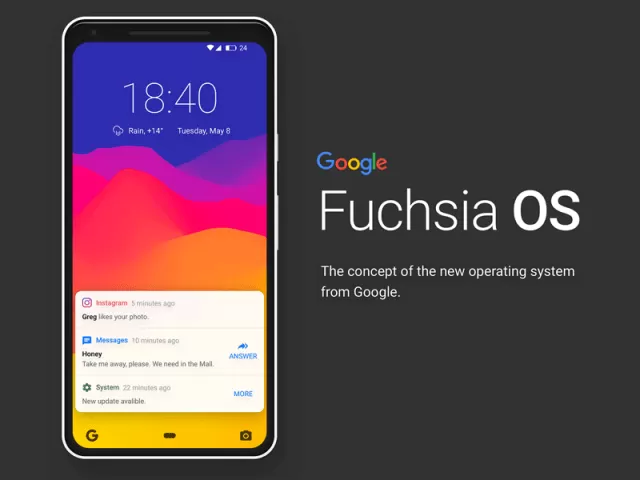
Where Fuchsia ended up (2026 update): This article was written in 2019, when Fuchsia was widely expected to replace Android. That didn’t happen. Fuchsia shipped quietly in 2021 as the OS powering Google’s Nest Hub smart displays — its only consumer deployment to date — and Google has since scaled back the team. Android and ChromeOS remain Google’s main platforms, with Fuchsia surviving as a long-term kernel research effort rather than the unified OS it was rumored to become. The original analysis below is preserved as written; it’s a useful snapshot of what the industry expected and why.
Google is currently developing a capability-based operating system named Fuchsia. In contrast, with the other Google Chrome and Android OS, which are based on the Linux kernel, Fuchsia is based on “Zircon” a new microkernel. The project appeared on GitHub in August - 2016 without any official announcements.
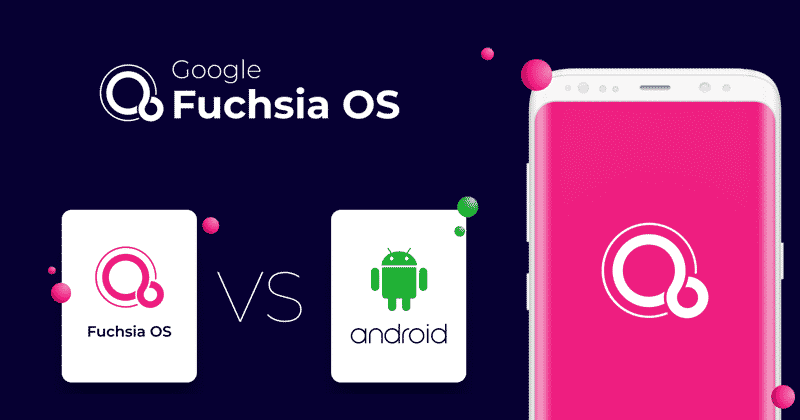 Pink + Purple == Fuchsia (a new Operating System)
Google Fuchsia remains in mystery, but Google is slowly beginning to open up about the next-generation operating system, its purpose, and what devices it might power. At Google’s I/O developer conference, Android and Chrome chief Hiroshi Lockheimer offered some rare insight into Fuchsia in front of public audiences.
What we do know about Fuchsia is that it’s an open source project but could run all manner of devices, from smart home gadgets to laptops to phones. It’s also known to be built on an all-new, Google-built kernel called “zircon,” formerly known as “magenta,” and not the Linux kernel that forms the foundation of Android and Chrome OS.
Google Fuchsia would enable developers to code apps, programs, and tools that could work on all of Google’s platforms, without the need for the process of optimization.
Here’s more detail to know about Google Fuchsia:
Modern day software and IT systems require full-time management in the digital lead business place. However, many organizations, even those that operate in the ‘tech’ sector, still view IT not as an integral part of their business strategy but as a back office “support” function.
What Google Fuchsia is for?
The Fuchsia GitHub project suggests that it can run on many platforms. The other media sources are suggested that its capable of running on universal devices like smartphones, tablets, personal computer, and embedded systems too.
The Google Flutter, a Software development Kit allowing cross platform development abilities for Android and iOS is being used to write User interface and apps for Fuchsia.
What will Google Fuchsia look like?
There are not any official announcements declared yet, but as per technology news and web information. We think Fuchsia will be the replacement for Google Chrome and Google Android OS platforms. The Github project is also available online to early users or developer who are eager to check Fuchsia’s early look.
When Will Google Fuchsia Release?
There is not an official release date for Google Fuchsia right, it is still in its formative stages. We wouldn’t be surprised if Google officially acknowledged Google Fuchsia this year in 2019
Nobody knows what Google Fuchsia will look like in the end. There’s very little in the way of hard information, and what is out there is pretty vague. However, we do know that Google Fuchsia revolves around the idea of being able to do whatever you want from whatever device you have handy.
Google Fuchsia could be Google’s answer to Microsoft and Apple’s united platforms. In turning Android into one of the two biggest smartphone platforms and later popularizing Chrome OS – not to mention G-Suite, Google’s web-based productivity programs. Google has already kind of become a major player on all platforms.
Related Reading
- A Comprehensive Guide for Google Search Quality Evaluation
- Google Analytics 4 Custom Dimensions – What You Need to Know
- The Future of Software Development: Trends and Predictions
Planning your next build?
From database choices to cloud architecture, we help teams make the technical decisions they won't regret in a year.
Architecture reviews, development, and modernization.
Discuss your projectA technical conversation, not a sales pitch.