Unlock the Benefits of Headless CMS
Headless CMS vs Traditional CMS
Explore the key differences, benefits, and considerations when choosing between Headless and Traditional CMS solutions for your business.
Introduction to Headless CMS vs Traditional CMS
Headless CMS and traditional CMS systems are two distinct approaches for managing, creating, and delivering content. While both systems share similar objectives, they differ in how they serve content. Depending on your goals and requirements, one system may be more suitable than the other.
In this introduction, we’ll provide a brief overview of each system, and explain the key differences between them. We’ll also take a look at the advantages and disadvantages of both approaches in order to help you determine which one is right for you.
Brief Overview: What is a Traditional CMS?
A traditional Content Management System is a comprehensive system that is used for creating, editing, and delivering content. This system typically consists of an integrated suite of tools for publishing, hosting, and organizing digital media like text, images, audio, and video. It’s designed to provide users with an intuitive user experience that makes it easier to manage content.
Traditional CMSs often provide features such as editorial workflows, access control, versioning, and search capabilities. They also typically feature an administrative dashboard for controlling content, managing users, and monitoring website performance.
Comprehensive Guide to Headless CMS Architecture
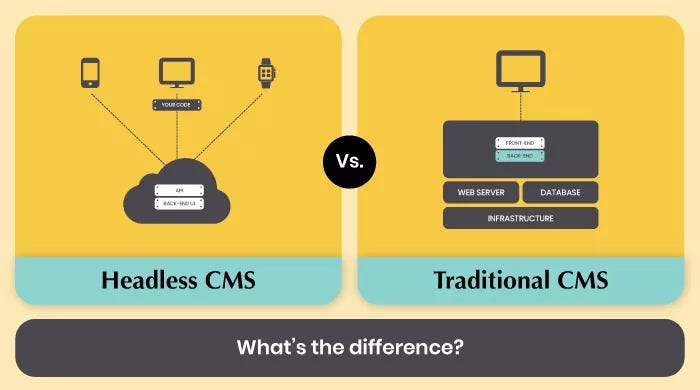
A headless CMS is essentially an API-based content management system that decouples the presentation layer from the content layer. This means that the content is no longer tied to a specific front-end application or website. Instead, the content is managed separately from its presentation layer using an API.
This type of architecture provides more flexibility and scalability since the content is no longer bound to a particular platform. This allows developers to create new applications quickly without needing to rebuild the entire stack.
Headless CMSs also provide users with more control over their data since they can use any front-end technology of their choice. They also provide superior performance since only the content is being sent to the client, not the content and the presentation layer.
Differentiating the Benefits of Headless CMS over Traditional CMS
In today’s digital world, choosing the right content management system (CMS) for your website is essential. There are two main options available: traditional CMS systems and headless CMS. Each approach has its own benefits and drawbacks, making it important to understand the differences between them before making a decision.
The main difference between a traditional CMS and a headless CMS is in how content is delivered. Traditional CMS systems are designed to deliver content through a predetermined presentation layer, such as a specific website design template. On the other hand, headless CMS systems are more flexible, allowing content to be delivered across multiple channels or in different formats. This allows for greater customization and more targeted content delivery.
On the technical side of things, traditional CMS systems tend to be limited in terms of scalability and flexibility. They usually require manual coding to update UX/UI features or deploy new ones. Headless CMS systems allow developers to quickly and easily integrate their content management process with existing applications and systems. This makes them much more efficient and cost-effective.
Headless CMS systems also provide greater control over content delivery. This is especially important if you need to reach a wider audience or want to customize how your content is presented across different channels. Traditional CMS systems are limited in this regard, as they rely heavily on preconfigured templates and interfaces, which can make it difficult to tailor the content to a specific audience.
Finally, headless CMS systems offer improved security compared to traditional CMS systems. Since all the content is stored in a cloud-based database, it’s much easier to protect from malicious attacks. Traditional CMS systems often store data locally, which can leave them vulnerable to external threats.
Pros and Cons of a Headless CMS
Pros
- It is infinitely customizable and can be tailored to the exact needs of your application.
- The user interface, or “head”, can be completely separated from the backend, allowing for faster development times.
- Scalability and access control is facilitated, allowing for secure storage of confidential content.
- It provides better personalized experiences, as the content can be decoupled from the user interface.
- It also offers better flexibility when creating websites, as you can choose to use whatever frontend framework you like.
Cons
- It requires an experienced developer to build and maintain complex applications, as APIs are the primary method of interaction with the system.
- The design process is more complex, as the content must be tailored to the needs of each platform.
- It does not provide a full-featured content authoring environment, so it may be difficult for some users to get started.
- The cost of implementation and maintenance may be higher than with traditional CMS solutions.
- The lack of customization tools may be a problem for some developers who want to create unique experiences.
An In-Depth Look at Traditional CMS Systems
Traditional CMS systems, also known as content management systems, offer an excellent way to manage and produce content for websites. A traditional CMS is built with a specific purpose in mind, and can be configured to display content in a specific format or style. These systems store data in a central database, enabling the website owner to make changes easily and quickly.
Traditional CMS systems are designed to be user-friendly, requiring minimal technical expertise to use. They come with pre-made themes and templates to help with the design process, as well as intuitive tools for managing content. This makes them ideal for organizations who want to establish a strong online presence without needing to invest heavily in design and development.
Most traditional CMS systems are customizable, allowing website owners to add plugins, widgets, and other features to extend the functionality of their websites. They also come with built-in analytics, so website owners can track user behaviour and gain valuable insights into how their websites are performing.
However, there are some drawbacks to traditional CMS. Many of these systems are not as secure as headless CMS solutions, making them vulnerable to malicious attacks. Additionally, they often require more maintenance and upkeep than headless alternatives. As such, it is important to weigh the pros and cons of a traditional CMS carefully before choosing it.
Comparing the Benefits of Traditional CMS over Headless CMS
Choosing the right CMS approach to manage your website can be a daunting task. It’s important to weigh the various features and benefits against the limitations of each approach before making a decision. Let’s explore the pros and cons of traditional CMS systems and headless CMS systems to help you decide which one is best for you.
Pros and Cons of a Traditional CMS System
A traditional CMS system allows you to build, manage, and update a website more easily as it comes pre-packaged with a range of useful features. These include optimized web page templates, blog creation tools, content management tools, and easy-to-use navigation. A traditional CMS requires minimal development work to get up and running quickly and is ideal for static or simple websites.
However, traditional CMS systems are often inflexible and can lack the customization options needed for more complex websites. They also make it difficult to integrate with other systems and services as they require additional plug-ins or custom coding which can be expensive and time-consuming.
Pros and Cons of a Headless CMS System
A headless CMS system offers more flexibility for managing and deploying content on multiple devices or platforms. The ‘headless’ approach separates the content from the presentation layer, giving developers the freedom to choose the best technology framework for their project. It also removes the limitations of a traditional CMS by making it easier to build and customize websites based on individual requirements.
However, headless CMS are often more complicated to set up and maintain. Developers must also keep up-to-date with the latest trends in web technologies. While this provides more freedom, it also requires more technical knowledge and can be prone to errors if changes are not correctly implemented.
Conclusion
In conclusion, both traditional CMS and headless CMS have their own unique advantages and disadvantages. Depending on your needs, budget, and technical skills, one of these approaches could be better suited to your particular project. Carefully consider the requirements of your website and research the options before selecting a CMS solution.
Discussion: Which Approach Should You Take?
In the world of modern web development, there is no one-size-fits-all answer to this question. When it comes to choosing between a headless CMS vs. a traditional CMS, it’s important to consider the unique requirements and objectives of your project.
A headless CMS offers a high degree of flexibility when it comes to customization, scalability, and portability. However, it may require more technical know-how and additional resources in order to get the most out of its features. On the other hand, with a traditional CMS, you can leverage ready-made frameworks that make getting up and running much easier. It also requires less technical understanding to modify and maintain content.
When making a decision, there are several factors to consider. These include the complexity of the project, the available budget, the timeframe, the technical backgrounds of the team members, and the total cost of ownership. Additionally, depending on the specific needs of the project, you may consider opting for a combination of both approaches.
It’s important to consider the long-term goals of your project as well. For example, if you need a system that can easily scale to accommodate increasing traffic and content, a headless CMS would be the better option. On the other hand, if you need a quick solution that allows you to quickly add content without needing a team of developers, a traditional CMS may be more suitable.
Ultimately, the approach taken will depend on the individual project and its unique requirements. The key is to weigh the benefits of each system and assess how they fit with the specific goals of your project. With careful planning and an understanding of the available options, you can settle on the right solution for your particular needs.
Factors for Determining the Right CMS Solution for Your Business
Choosing the best CMS solution for your business can be a tricky task. There are lots of different options out there, and each has its own set of benefits and drawbacks. It can be difficult to know which option is the right one for you. To identify the best CMS solution for your business, there are several factors to consider.
One of the major factors to consider when choosing a CMS is the cost of implementation and maintenance. Traditional CMS solutions tend to require larger investments in time and money to set up and maintain. Headless CMS solutions, on the other hand, are often easier to set up and maintain, with lower running costs.
Before making any decisions, evaluate your current resources and the type of expertise you have on-hand. If you have limited technical knowledge, a traditional CMS may be easier to use and maintain. Whereas, if you have a team of developers, a headless CMS may be the more efficient and cost-effective choice.
Before you decide, think about the needs of your business. Are you looking for a CMS that is highly customisable and offers a range of features? Or do you need something that is user-friendly and doesn’t require a lot of resources? This will help you determine which approach is best for your business.
Finally, consider the future strategy of your business. How does the CMS fit into your long-term plans? Is it scalable and able to grow with your business? If not, then you may want to consider a different approach.
Additional Resources to Consider
There are a number of resources available to anyone looking to explore the differences between Headless CMS and Traditional CMS. Whether you’re just starting out or are well on your way in making a decision, these resources can help guide you and provide more insight into the benefits and drawbacks of each approach.
- Headless CMS Whitepapers: Whitepapers are an excellent source of information for researching the advantages and pitfalls of a Headless CMS. You can typically find whitepapers from tech companies and industry leaders that discuss features, pros and cons, and more.
- Headless CMS Blogs and Discussion Boards: Blogs and forums related to Headless CMS provide valuable insights that often go beyond the basics. Look for posts by developers and industry experts that share their experiences and highlight particular use cases.
- Books on Headless CMS: There are a few books specifically dedicated to the topic of Headless CMS. These are typically more in-depth than a blog post or an online article and may provide answers to specific questions that weren’t covered elsewhere.
Additionally, there are a few additional resources such as online courses and webinars that can help explore the topic further. It’s important to note, however, that resources like these can often present a biased view. Make sure to double check the information you get from such sources.
Finally, don’t forget to take a look at the documentation provided by the respective CMSs. These documents can provide invaluable insights into the various features, workflow, and other aspects of a system.
Finding the Right Solution for Your Requirements
When it comes to choosing the right CMS solution for your business, it’s important to consider both headless and traditional CMS systems. Each of these approaches offers advantages and disadvantages that should be weighed carefully in order to find the optimal solution for your needs.
The primary key for a successful implementation lies in understanding the differences between the two systems, including the architecture each utilizes, the features and capabilities offered, and the potential risks associated with each. Additionally, other factors such as user requirements, budget limitations, and technical expertise must also be taken into consideration.
To assist you in making an informed decision, ask yourself the following questions:
- What is my overall goal?
- What type of content do I need to manage?
- What level of flexibility and scalability do I need?
- What are the budget constraints?
Considering the answers to these questions, along with the information provided in this guide, will ensure that you can make the best educated decision for your organization. In the end, selecting the right CMS approach will help you build and maintain a successful digital presence for years to come.
Related Reading
- Unlock Benefits of Content Previews and Approvals for Your CMS
- Unlock Benefits of Content Versioning and Collaboration
- Unlock Omnichannel Content Delivery with Headless CMS
Planning a content platform?
Headless, traditional, or custom — we help teams pick and build the CMS architecture that fits how they actually work.
CMS strategy, architecture, and implementation.
Discuss your CMSA technical conversation, not a sales pitch.