
Power of Flexibility and Extensibility with an API-first CMS
What is an API-first Approach?
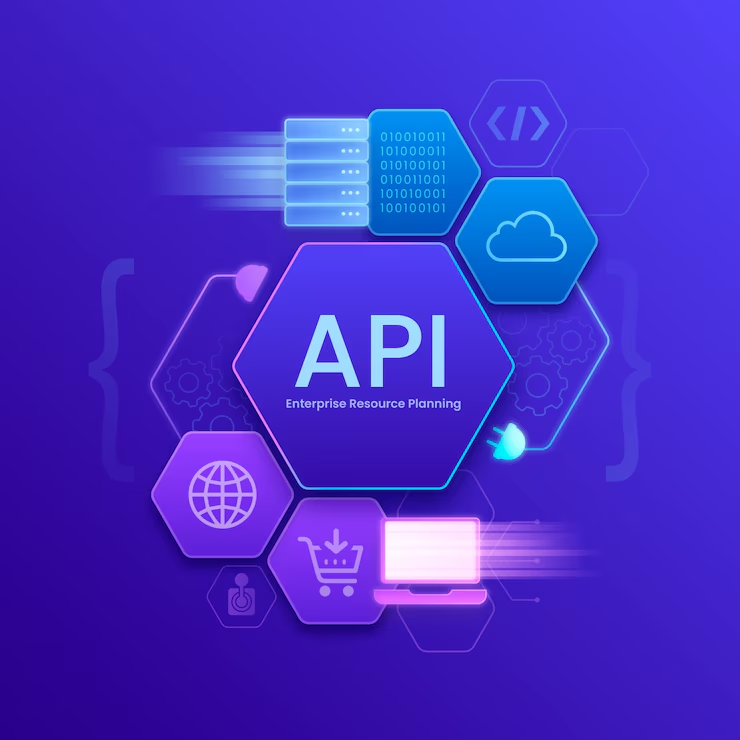
An API-first approach is a method of developing and managing content management systems (CMS) that places the Application Programming Interface (API) at the core. In modern CMS architectures, APIs enable access, retrieval, updating, and deletion of content. This approach builds the CMS around these APIs to maximize flexibility.
It allows developers to create user interfaces and applications without directly interacting with the database. By decoupling the interface from the underlying data, the API-first model provides enhanced flexibility for content manipulation, updates, and extensions.
Why is an API-first Approach Important for CMS Architecture?
API-first development reduces the time developers spend writing repetitive code. A single API layer can power multiple interfaces such as web, mobile apps, and third-party integrations. Without it, separate code would be required for each use case.
APIs also simplify the creation of custom solutions. They allow for easy development of plugins, extensions, or new user interfaces. Integration with existing systems becomes easier, saving time and resources.
This approach also makes maintenance easier. Developers can update the API layer instead of modifying the CMS codebase, and the changes reflect across all connected platforms. This keeps your CMS current and secure.
Benefits of an API-first Approach to Content Management Systems (CMS)
Using an API-first architecture brings several benefits. It allows rapid development of custom applications tailored to organizational needs.
One of the biggest advantages is flexibility. An API-first CMS lets developers manage and display content independently. This speeds up iteration and deployment of new features.
Extensibility is another key benefit. APIs integrate well with external software, letting you build custom applications while leveraging existing tools and investments.
It also ensures content portability across platforms. With a centralized content source accessible via APIs, the same content can be reused across web, mobile, and IoT devices. This enhances cross-platform consistency and efficiency.
Ultimately, an API-first CMS empowers teams to build dynamic, scalable websites aligned with business goals.
Outline the Structure of a Typical API-First CMS
An API-first CMS helps manage and deliver content across digital platforms. It offers scalability, customization, and ease of use.
Typical components include a core web stack, a content database, and APIs. The web stack (HTML, CSS, JavaScript) handles front-end display. The database stores content, while APIs serve as bridges for accessing features and third-party integrations.
The system generally has two main layers:
- Data Layer: Manages content storage, environments (staging, production), and version control.
- Presentation Layer: Controls how content appears via front-end code and API-driven extensions.
This structure enables organizations to create custom CMS systems tailored to their exact requirements while using modern technologies.
Best Practices for Building an API-First System
Adopting an API-first strategy requires adherence to best practices for security, efficiency, and maintainability.
Simplify Your API
Minimize the number of APIs—ideally 1 to 3—to avoid unnecessary complexity. Use established, reliable APIs instead of custom ones wherever possible to reduce errors and simplify debugging.
Plan Ahead
Anticipate both current and future system needs. Architectural diagrams help visualize component interaction. Ensure scalability so your CMS can grow with user demands.
Test Thoroughly
Comprehensive testing ensures the stability of your APIs. Test for functionality, performance, security, and reliability before deployment to maintain robustness.
Monitor Performance
APIs often integrate multiple services. Monitor all components to catch performance issues early, ensuring that one failing service doesn’t slow down your entire system.
The Benefits of Flexibility and Extensibility With API-First CMS
An API-first approach offers two major advantages: flexibility and extensibility.
Flexibility
Flexible systems can adapt quickly to changes. An API-first CMS makes it easy to update features or UI elements without major disruptions, helping teams respond rapidly to market needs.
Extensibility
Extensible systems support future growth and integration. They can easily accommodate third-party tools or new functionalities. With APIs, you can build and scale features independently and efficiently.
This combination of flexibility and extensibility makes API-first CMS ideal for organizations aiming to stay competitive and future-proof their content infrastructure.
Review Technologies for Setting up a Flexible and Extensible API-First CMS Architecture
Selecting the right technologies ensures that your CMS is scalable and adaptable. Below are some commonly used API technologies:
RESTful APIs
RESTful APIs use HTTP methods to exchange data. They are easy to implement, language-agnostic, and ideal for accessing CMS content.
GraphQL
GraphQL allows more precise queries and fewer API calls than REST. It is ideal for complex applications requiring specific data across multiple endpoints.
Hypermedia APIs
These use hyperlinks to link related resources. Hypermedia APIs are suitable for dynamic systems and enhance navigability within CMS interfaces.
The Benefits of Choosing the Right Technology
Choosing the appropriate API type enhances performance and simplifies long-term maintenance. Proper selection reduces the need for future rework and supports your scalability goals.
Integrating APIs with Legacy Systems
Combining modern APIs with legacy infrastructure adds significant value. It allows reuse of existing systems while enhancing functionality and flexibility.
With API integration, you can connect external data sources, automate tasks like user registration, or add new services such as payment gateways. It enables consistent content distribution across platforms while maintaining central control.
This approach reduces redevelopment time, extends existing systems’ utility, and supports multichannel publishing.
How to Create a Secure and Robust API-first Architecture
APIs are publicly accessible and must be protected from threats like DDoS, code injection, or unauthorized access. Follow these security best practices:
- Use authentication and authorization mechanisms.
- Encrypt endpoints with TLS for secure data transmission.
- Implement monitoring tools to detect suspicious behavior.
- Apply access controls and permissions.
- Use intrusion detection to prevent threats.
- Regularly review and update your security protocols.
Implementing these measures ensures your CMS is secure, trustworthy, and compliant with modern standards.
Caching and Performance Optimization for API Usage
Optimizing performance is critical for an API-first CMS. Caching stores frequently requested data, reducing API calls and response times.
Improve backend performance by optimizing databases and code for faster execution. Use techniques like query optimization, read replicas, and sharding to manage high traffic loads.
These strategies help ensure stable, fast performance even during peak usage, enhancing the overall user experience.
Practical Uses of API-first Content Management Systems
API-first CMSs enable use cases beyond traditional content publishing.
Multiple Content Sources
Integrate data from different locations—legacy CMSs, databases, or external platforms like social media—into one unified system.
Content Personalization
Use APIs to tailor content for individual users based on profile data or behavior. This improves engagement and relevance.
Streamlined Workflows
Create automated processes that route content to the right channels or users, saving time and boosting efficiency.
Data Analysis
Merge data from multiple sources for deeper insights. This supports better decision-making and content optimization strategies.
Adapting and Scaling an API-First Architecture for Larger Projects
Scaling an API-first system is easier with thoughtful planning. Build modular infrastructure that can be reused and extended. Use existing APIs where possible to reduce development overhead.
Adopt an API management platform to handle monitoring, versioning, and updates. Invest in automation for deployment and scaling consistency.
With these strategies, your architecture can support growing user bases, increasing content, and new functionality with minimal disruption.
Wrapping up
An API-first CMS architecture brings many benefits: flexibility, extensibility, security, scalability, and seamless integration with legacy systems.
This architecture fits both small and large projects, helping teams respond faster to business needs. It creates a strong foundation for modern content delivery and user experience.
By adopting API-first strategies, organizations can stay ahead in the digital landscape and ensure their CMS remains adaptive, robust, and future-proof.
Related Reading
- User-Generated Content (UGC) - Harness the Power of UGC
- Master Content Syndication and Integration With an API-first CMS
- Unlock the Power of Conversational Content
Planning a content platform?
Headless, traditional, or custom — we help teams pick and build the CMS architecture that fits how they actually work.
CMS strategy, architecture, and implementation.
Discuss your CMSA technical conversation, not a sales pitch.