Unveil Your Multichannel Content Management Plan

Introduction to Multichannel Content Management
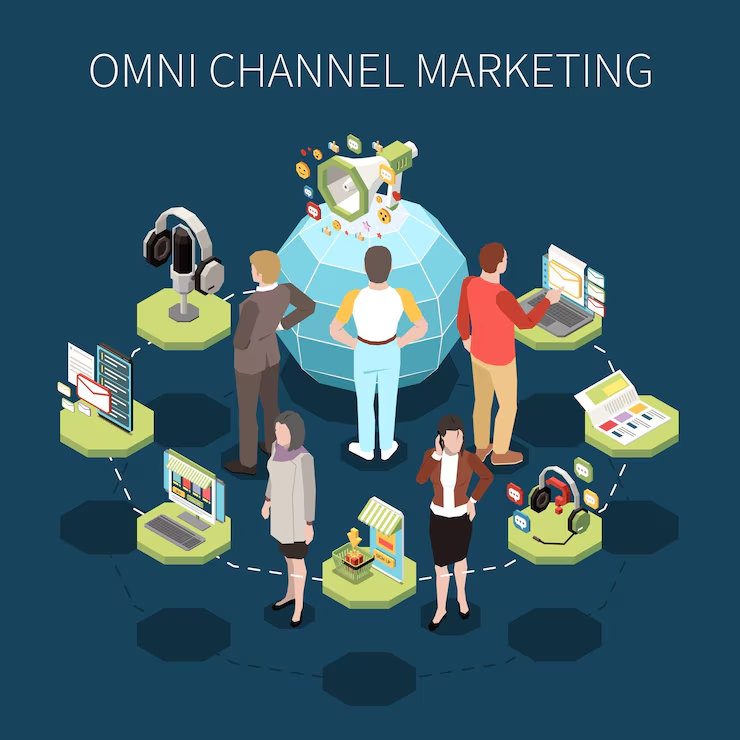
Multichannel content management ensures a consistent brand experience across print, web, social media, and more. It requires coordinating and updating each channel’s content. As a result, your messages stay consistent and your branding remains on point.
An effective strategy can transform your business. By consolidating content and delivering it consistently, you build a strong, recognizable brand. This boosts customer loyalty and trust.
Also, managing content on multiple channels helps you reach more people. A consistent message across platforms helps you stand out from competitors.
To maintain consistency, you must plan and prepare carefully. You need to know each channel well. That means understanding its strengths and challenges. Then, create content that adapts seamlessly across platforms.
Benefits of a Consistent Brand Experience
Delivering a consistent brand experience can build long-term customer relationships. Customers stay loyal when they see the same visuals, tone, and values—no matter where they engage.
Consistent branding also strengthens recognition. Over time, consumers learn to identify your brand quickly. They may not recall your name, but they will remember your logo and style.
When content is consistent, it also improves user experience. Every touchpoint feels familiar and reliable. This builds trust.
Additionally, consistent content boosts visibility. Audiences see your brand wherever they go. Familiarity makes your ads stronger. Users respond more often to ads from a known brand.
Creating consistency across platforms is challenging, but worth it. A unified message draws customers in. It helps turn them into long-term fans.
Understanding the Multichannel Landscape
Today, brands engage audiences across many platforms. Multichannel content management helps you manage this complexity.
Instead of versions for each platform, multichannel strategy uses the same content everywhere. Yet, it still uses each platform’s strengths. For example:
A blog post may include embedded videos on social media.
It might also feature a call-to-action in an app.
This ensures brand recognition no matter where users find you.
To start, research your audience. Learn their content habits. Then, pick the right channels. Finally, plan how your message will stay consistent on each one.
Strategies for Applying Consistency Across Platforms
Use these tips to unify your content across channels:
Brand Identity: Use the same logo, colors, fonts, and tone everywhere.
Automation: Send content to platforms with automated tools. This saves time and maintains consistency.
Track Changes: As your brand evolves, update templates and assets accordingly.
Quality Checks: Review content regularly for typos, broken links, and outdated info.
When you maintain consistency, your audience notices. That leads to better loyalty and engagement.
Guidelines for Ensuring Brand Consistency
Consumers form emotional connections with reliable brands. To protect those bonds:
Define Brand Voice: Use a consistent tone in every form of communication.
Visual Style Guide: Stick to the same logo sizes, colors, layouts, and font styles.
Quality Standards: Proofread and review all content before publishing.
Central Repository: Use a shared resource to store brand assets and templates.
Message Review: Analyze past campaigns to see what resonates. Then update your content accordingly.
Applying these steps helps your brand stay cohesive and memorable.
Creating an Effective Content Management System
An effective CMS gives you full control of content publishing and updating. It should support all your platforms efficiently.
Start by defining the project scope. This helps you choose the right CMS tools.
Next, structure your content. Decide how texts, images, videos, and audio files will be stored and accessed.
Then, choose a CMS that answers your needs—whether it’s WordPress, Drupal, or a headless CMS. Make sure it covers content approval, workflow, and analytics.
Finally, connect your CMS to distribution channels. Implement automation support for publishing to web, email, and social platforms.
Setting Up Automated Distribution Processes
Automation ensures your content reaches audiences on time, every time.
First, map out your content flow—from creation to publication. This helps you spot gaps.
Next, choose an automation system or script. Use best practices: no duplicates, clear rules, and audience targeting.
Lastly, test the system. Monitor metrics like page views, shares, and comments. Then tweak your setup until it reliably reaches the right people.
Tracking and Analyzing Metrics
Metrics show your strategy in action. They highlight what’s working and what needs help.
Watch these indicators:
Views: How many people see your content?
Engagement: Are they spending time, liking, or commenting?
Shares: Do users promote your content?
Conversions: Are they taking action?
Feedback: What is the audience saying?
Use this data to guide future content. Low views might mean channel mismatch. High engagement but low conversions may need stronger calls-to-action.
Optimizing Your Content Delivery Strategy
Once your strategy is set, enhance your delivery by:
Setting clear goals: Know whether you aim to boost engagement, leads, or reach.
Choosing platforms well: Understand each platform’s best use and tailor content.
Timing posts: Schedule for peak moments—morning, noon, or night.
Mobile-first: Ensure fast and responsive mobile experiences.
Reviewing performance: Smile at good metrics. Tweak content that underperforms.
These steps keep content fresh, fast, and relevant across channels.
Tips for Managing Multiple Teams
Here’s how to coordinate multiple teams effectively:
Communicate regularly: Hold short daily or weekly syncs.
Be open and clear: Define roles, expectations, and deadlines.
Encourage collaboration: Share knowledge and resources.
Reward performance: Use incentives for team motivation.
Set realistic timelines: Stick to achievable goals.
Good communication and teamwork keep your strategy on track.
Potential Pitfalls to Avoid
Avoid these common mistakes:
Undefined audience: You can’t resonate without knowing who you’re speaking to.
Channel neglect: You may miss key platforms if you focus too narrowly.
Lack of strategy: KPIs and timelines must be clear from the start.
No update cycle: Trends change. Update your content often to stay relevant.
These tips ensure your setup remains flexible and relevant.
Conclusion
Building a consistent brand across platforms takes effort, but it’s essential in today’s market.
By planning your channels, implementing brand guidelines, and setting up systems, you gain an edge. Always track performance and update your content. Watch for common traps along the way.
With a smart multichannel content management system, you can grow your brand presence—one platform at a time.
Related Reading
- Automate Your Content Management with AI Technology
- Gamification in Content Management
- Unlock the Possibilities of AR and VR in Content Management
Planning a content platform?
Headless, traditional, or custom — we help teams pick and build the CMS architecture that fits how they actually work.
CMS strategy, architecture, and implementation.
Discuss your CMSA technical conversation, not a sales pitch.