
Integration

Integration is the process of combining different systems, tools, or components to work together as a unified whole. It enhances functionality and streamlines operations.

Comparing AWS, Google Cloud, and Microsoft Cloud_ A Comprehensive Overview of Leading Cloud Platforms
Blog

Comparing AWS, Google Cloud, and Microsoft Cloud: A Comprehensive Overview of Leading Cloud Platforms

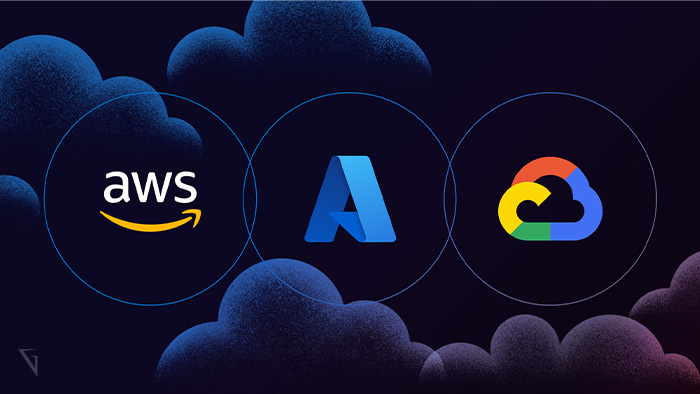
Cloud computing has transformed the way businesses operate by providing on-demand access to a wide range of computing resources and services over the Internet. It offers unprecedented scalability, flexibility, and cost-efficiency, enabling organizations to focus on their core business activities while leveraging the power of the cloud. With cloud computing, businesses can rapidly deploy applications, scale resources up or down as needed, and pay only for the resources they consume, thereby reducing capital expenditures and increasing operational efficiency. Introduction to the three major cloud platforms: AWS, Google Cloud, and Microsoft Cloud Amazon Web Services (AWS), Google Cloud, and Microsoft Cloud (Azure) are the three dominant players in the cloud computing market. These platforms provide a comprehensive suite of services that allow businesses to build, deploy, and manage applications and infrastructure in the cloud. AWS, Google Cloud, and Microsoft Cloud have built extensive global data center networks, enabling businesses to deploy their applications closer to their target audience and improve performance. Each platform offers a vast

Read More »

How can I implement data analytics and reporting capabilities in my web application?

To implement data analytics and reporting capabilities in your web application, you need to follow these steps:
1. Choose a data analytics and reporting tool that suits your requirements.
2. Integrate the tool into your web application by following the provided documentation.
3. Define the data sources where you want to collect data for analytics.
4. Design and implement the necessary database schema to store the collected data.
5. Develop the data processing logic to transform raw data into meaningful insights.
6. Create the necessary APIs or connectors to fetch data from your web application.
7. Configure the analytics and reporting tool with the data sources and processing logic.
8. Design and implement the desired reports and visualizations.
9. Test the implementation to ensure accurate results.
10. Monitor and fine-tune the analytics and reporting capabilities regularly for optimal performance.
By following these steps, you can effectively implement data analytics and reporting capabilities in your web application.

Read More »

What is the role of APIs in web application development, and how can I integrate external services?

APIs play a crucial role in web application development by allowing different software systems to communicate and share data. They act as a bridge between web applications and external services, enabling developers to leverage functionalities provided by third-party services. By integrating external services through APIs, web applications can access a wide range of features like payment processing, mapping, social media integration, and more. The integration process involves obtaining API keys or credentials, making API requests, and handling responses. APIs ensure seamless communication between web applications and external services, enhancing application functionality, scalability, and speed.

Read More »